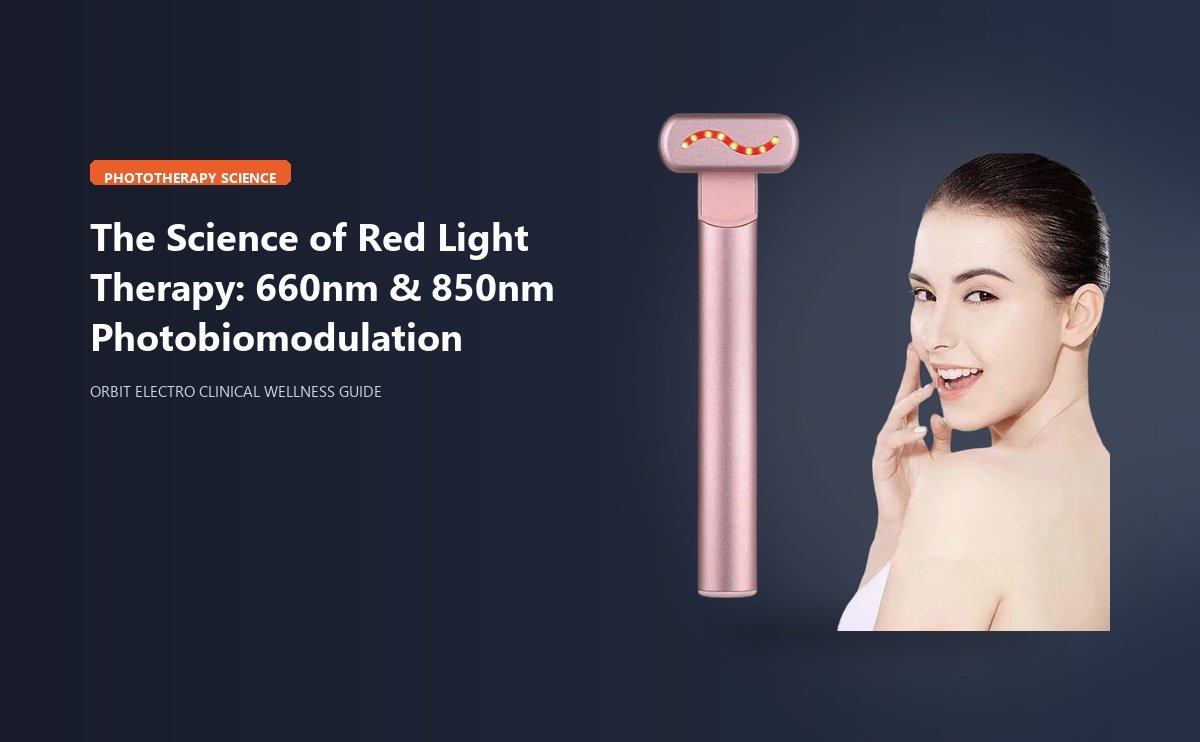
Photobiomodulation uses non-ionizing light sources—including lasers, LEDs, and broadband light—in the visible (600–700 nm) and near-infrared (700–1100 nm) electromagnetic spectrum. It is a photochemical process analogous to photosynthesis in plants.
When target wavelengths of 660nm (deep red) and 850nm (near-infrared) are absorbed by cytochrome c oxidase within the mitochondrial respiratory chain, ATP synthesis accelerates dramatically. This cellular energy influx triggers fibroblast activation, boosting endogenous collagen and elastin production without thermal tissue damage.
Why At-Home LED Wands Are Revolutionizing Skincare
Historically confined to expensive clinical dermatological offices, targeted microcurrent and red LED phototherapy are now available in handheld ergonomic formats. Applying 3 minutes of daily red light therapy with gentle therapeutic warming visibly restores skin suppleness and radiant facial tone.